
"Order macrobid 100mg with amex, gastritis tratamiento".
Q. Derek, M.A., Ph.D.
Clinical Director, University of Pikeville Kentucky College of Osteopathic Medicine
For example gastritis diet xenadrine macrobid 50mg safe, proper atrial gastritis definition cause macrobid 100mg buy cheap line, imply pulmonary arterial gastritis diet ïðèâàò24 50 mg macrobid purchase mastercard, and pulmonary capillary occlusion pressures have been higher in patients undergoing cardiac surgical procedure receiving dopamine in contrast with dobutamine despite producing related increases in cardiac output gastritis enteritis 50 mg macrobid purchase. Dopamine may trigger extra pronounced tachycardia than epinephrine in cardiac surgical procedure sufferers. Like epinephrine and norepinephrine, dopamine directly increases myocardial oxygen consumption and should trigger or worsen myocardial ischemia within the presence of hemodynamically significant coronary stenoses. Dobutamine Commercial preparations of the synthetic catecholamine dobutamine include two stereoisomers (- and +), both of which stimulate -adrenoceptors, however these (-) and (+) stereoisomers trigger opposing agonist and antagonist results on 1-adrenoceptors, respectively. This unique pharmacology allows dobutamine to improve myocardial contractility and simultaneously scale back arterial vasomotor tone by way of 1- and 2-adrenoceptor activation, respectively. The 1823 adrenoceptor agonist impact of upper doses of dobutamine additionally serves to blunt the baroreceptor reflex-mediated tachycardia that might otherwise happen. Nevertheless, dobutamine usually will increase heart rate by direct 1adrenoceptor-mediated positive chronotropic and dromotropic results. In truth, dobutamine produced considerably greater heart charges than epinephrine at equivalent values of cardiac index in patients after coronary artery surgery. This is the underlying precept behind dobutamine stress echocardiography as a diagnostic software for the detection of coronary artery illness as a result of regional wall movement abnormalities within the affected coronary perfusion territories occur in response to the myocardial oxygen supply�demand mismatch during transient infusion of the drug. Dobutamine modestly decreases pulmonary arterial pressures and pulmonary vascular resistance by way of 2-adrenoceptor stimulation. Thus, dobutamine could also be a helpful constructive inotropic drug in intensive care unit patients with pulmonary arterial hypertension. However, this dobutamine-induced pulmonary vasodilation has the potential to exacerbate ventilation�perfusion mismatch, improve transpulmonary shunt, and contribute to relative hypoxemia. Unfortunately, a number of medical trials demonstrated that use of dobutamine was linked to an elevated incidence of major antagonistic cardiac occasions together with mortality in sufferers with decompensated coronary heart failure despite the theoretical useful cardiovascular effects of the drug. Nevertheless, dobutamine remains a helpful drug for the remedy of depressed myocardial contractility in patients with 824 sepsis. As a outcome, isoproterenol increases coronary heart rate and myocardial contractility and decreases arterial pressure via 1- and 2-adrenoceptor agonist effects, respectively. Isoproterenol was additionally used throughout cardiac transplantation to enhance heart fee and improve myocardial contractility within the deneverated donor organ. Thus, although the scientific applicability of isoproterenol is kind of limited at present, the comparison of the pharmacology of isoproterenol with other catecholamines deserves continued dialogue. Isoproterenol causes 2-adrenoceptor�mediated arteriolar vasodilation in renal, mesenteric, splenic, and skeletal muscle circulations. Isoproterenol causes direct optimistic chronotropic and dromotropic effects and increases heart rate due to 1-adrenoceptor activation. Tachycardia additionally occurs because hypotension stimulates baroreceptor reflex-mediated will increase in heart rate. Predictably, the hemodynamic effects of isoproterenol trigger dose-related increases in myocardial oxygen consumption. The synthetic catecholamine additionally reduces coronary perfusion stress and reduces diastolic filling time. These alterations in myocardial oxygen supply�demand relations may contribute to the event of acute myocardial ischemia or cause subendocardial 825 necrosis, even within the absence of coronary artery illness. Thus, isoproterenol may be especially deleterious in patients with flow-limiting coronary stenoses. Selective 2-Adrenoceptor Agonists A variety of short- and long-acting selective 2-adrenoceptor agonists, together with metaproterenol, albuterol, salmeterol, and fenoterol, are presently in medical use for treatment of bronchial asthma and persistent obstructive pulmonary disease. These medicine stimulate 2adrenoceptors in bronchial clean muscle to produce bronchodilation, reduce airway resistance, and improve obstructive symptoms. Reductions in histamine and leukotriene release from pulmonary mast cells, and improvements in mucociliary function may also contribute to helpful effects of selective 2-adrenoceptor agonists in patients with reactive airway disease. However, the 2-adrenoceptor selectivity of those medicine progressively decreases and 1-adrenoceptor� mediated antagonistic effects. Fenoldopam was initially developed as an antihypertensive treatment due to its actions as a vasodilator,forty six but the drug can also be capable of protecting the kidney in opposition to radiographic contrast-induced nephropathy, presumably by virtue of enhanced renal blood circulate. For example, a large meta-analysis based mostly totally on small single middle research instructed that fenoldopam may cut back the risk of acute tubular necrosis, the need for renal alternative therapy, and total 826 mortality in sufferers with or in danger for acute kidney damage. Intravenous fenoldopam has a fast onset of action as an antihypertensive medication. Rebound hypertension has additionally not been observed with abrupt discontinuation of the drug. The most typical antagonistic results of fenoldopam are associated to its effects as a vasodilator and include hypotension, tachycardia, flushing, dizziness, headache, tachycardia, and nausea. Sympathomimetics Ephedrine the sympathomimetic drug ephedrine exerts each direct and indirect actions on adrenoceptors. Endocytosis of ephedrine into 1- and 1-adrenoceptor presynaptic postganglionic nerve terminals displaces norepinephrine from the synaptic vesicles. The displaced norepinephrine is then released to activate the corresponding postsynaptic receptors to cause arterial and venous vasoconstriction and elevated myocardial contractility, respectively. Ephedrine additionally directly stimulates 2-adrenoceptors, which limits the increases in arterial stress that occur on account of 1-adrenoceptor activation. The commonest clinical use of ephedrine during anesthesia is treatment of acute decreases in arterial stress concomitant with bradycardia. Ephedrine was beforehand used for the therapy of hypotension in laboring parturients because the drug will increase uterine blood circulate, but phenylephrine could additionally be most popular in this setting as a end result of ephedrine crosses the placenta and should cause fetal acidosis. As a results of this minor structural distinction, phenylephrine virtually solely stimulates 1-adrenoceptors to improve venous and arterial vasomotor tone whereas exerting little or no effect on -adrenoceptors. Phenylephrine constricts venous capacitance vessels and causes cutaneous, skeletal muscle, mesenteric, splenic, and renal vasoconstriction. Intravenous boluses or infusions of phenylephrine are most frequently used for therapy of hypotension within the presence of regular or elevated heart price. The presence of 1-adrenoceptor blockade also has the potential to cause unopposed 1- and 2-adrenoceptor activity. For example, epinephrine will activate solely 1- and 2-adrenoceptors because the 1-adrenoceptor agonist effects of the catecholamine are inhibited. As a end result, epinephrine produces pronounced tachycardia (a 1 effect) and extreme hypotension (activation of two receptors inflicting arterial and venous vasodilation) when administered within the presence of an 1-adrenoceptor blocker. Similarly, norepinephrine and ephedrine solely activate 1adrenoceptors as a outcome of their 1-adrenoceptor agonist actions are inhibited. The pure 1-agonist phenylephrine also exerts little or no impact as a vasoconstrictor underneath these situations. The response of a given vascular bed to an 1-adrenoceptor antagonist relies on its intrinsic level of vasoconstriction, as blood vessels with higher vascular clean muscle tone will usually be more responsive to 1-adrenoceptor blockade. Phenoxybenzamine is an orally administered, comparatively nonselective adrenoceptor antagonist that binds irreversibly to 1- and 2-adrenoceptors (the ratio of selectivity for these receptor subtypes is approximately a hundred:1). Phenoxybenzamine is used virtually solely to normalize arterial pressure before surgical procedure in sufferers with pheochromocytoma. As a outcome, a number of weeks of treatment could additionally be required to acquire enough management of arterial strain. Restoration of regular intravascular quantity status is also an important aim of phenoxybenzamine therapy because hypovolemia ensuing from elevated serum norepinephrine and epinephrine concentrations contributes to hemodynamic instability throughout pheochromocytoma resection. Subsequent addition of a -adrenoceptor antagonist also helps in attaining these targets and also serves to defend the myocardium from the opposed effects of continual catecholamine stimulation. These mixed interventions facilitate higher cardiovascular stability during pheochromocytoma resection, which is normally associated with further 829 release of norepinephrine and epinephrine into the circulation throughout tumor manipulation. The most prominent side impact of phenoxybenzamine remedy is orthostatic hypotension, which can be particularly extreme in the presence of pre-existing hypertension or hypovolemia. Vasopressin could additionally be required to treat refractory hypotension related to phenoxybenzamine overdose. The competitive 1- and 2-adrenoceptor antagonist phentolamine is also utilized in sufferers with pheochromocytoma. Phentolamine is a potent intravenous vasodilator that quickly decreases arterial stress, however in doing so, additionally causes baroreceptor reflex-mediated tachycardia. Blockade of cardiac 2adrenoceptors by phentolamine might contribute to the event of arrhythmias.
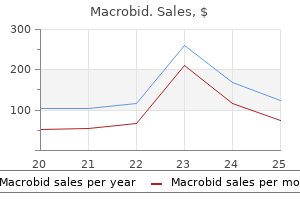
Thus atrophic gastritis symptoms mayo order macrobid 100mg without prescription, the elimination half-life is dependent upon two other variables www gastritis diet com macrobid 50 mg purchase line, clearance and volume of distribution gastritis diet 6 days macrobid 50 mg online buy cheap, that characterize gastritis diet áàðáîñêèíû macrobid 50 mg buy low cost, respectively, the extent of drug distribution and efficiency of drug elimination. The first part after injection is characterized by a very fast decrease in focus. The rapid lower in concentration during this "distribution section" is basically caused by passage of drug from the plasma into tissues. The distribution phase is followed by a slower decline of the focus owing to drug elimination. Elimination additionally begins immediately after injection, however its contribution to the drop in plasma concentration is initially much smaller than the autumn in focus because of drug distribution. To account for this biphasic conduct, one should contemplate the physique to be made up of two compartments: a central compartment, which incorporates the plasma, and a peripheral compartment. Drug distribution inside the central compartment is considered to be instantaneous. The elimination phase line is extrapolated back to time zero (the time of injection). The hybrid rate constants, and, are equal to the slopes of the 2 lines, and are used to calculate the distribution and elimination half-lives; and are known as hybrid fee constants as a result of they rely upon each distribution and elimination processes. The first term characterizes the distribution phase and the second time period characterizes the elimination phase. Immediately after injection, the primary time period represents a a lot bigger fraction of the entire plasma focus than the second term. After a quantity of distribution halflives, the value of the first term approaches zero, and the plasma concentration is essentially equal to the worth of the second term. In multicompartmental fashions, the drug is initially distributed only within the central compartment. Therefore, the initial obvious quantity of distribution is the amount of the central compartment. Immediately after injection, the amount of drug current is the dose, and the concentration is the extrapolated concentration at time t = 0, which is equal to the sum of the intercepts of the distribution and elimination traces. Drug moves from the central to the peripheral compartment, which additionally has a volume, V2. This intercompartmental switch is a first-order process, and its magnitude is quantified by the rate constant k12. As quickly as drug seems in the peripheral compartment, some passes back to the central compartment, a process characterized by the rate fixed k21. The switch of drug between the central and peripheral compartments is quantified by the distributional or intercompartmental clearance: the third process that begins immediately after administration of the drug is irreversible removal of drug from the system through the central compartment. At equilibrium, the drug is distributed between the central and the peripheral compartments, and by definition, the drug concentrations within the compartments are equal. Therefore, the ultimate word volume of distribution, termed the amount of distribution at steady-state (Vss), is the sum of V1 and V2. Extensive tissue uptake of a drug is mirrored by a big quantity of the peripheral compartment, which, in turn, results in a large Vss. As within the single-compartment mannequin, in multicompartment fashions the elimination clearance is the same as the dose divided by the world under the focus versus time curve. This space, in addition to the compartmental volumes and intercompartmental clearances, can be calculated from the intercepts and hybrid rate constants, without having to reach steady-state 678 circumstances. Therefore, the plasma focus is the sum of three exponential phrases: the place t = time, Cp(t) = plasma focus at time t, A = intercept of the speedy distribution part line, = hybrid rate fixed of the rapid distribution phase, B = intercept of the slower distribution part line, = hybrid rate fixed of the slower distribution phase, G = intercept of the elimination phase line, and = hybrid rate fixed of the elimination part. This triphasic conduct is defined by a three-compartment pharmacokinetic mannequin. As within the two-compartment model, the drug is injected into and eliminated from the central compartment. Drug is reversibly transferred between the central compartment and two peripheral compartments, which accounts for two distribution phases. Drug switch between the central compartment and the extra quickly equilibrating, or "shallow," peripheral compartment is characterised by the first-order price constants k12 and k21. Transfer in and out of the more slowly equilibrating, "deep" compartment is characterised by the speed constants k13 and k31. In this model, there are three compartmental volumes: V1, V2, and V3, whose sum equals Vss; and three clearances: the fast intercompartmental clearance, the sluggish intercompartmental clearance, and elimination clearance. The pharmacokinetic parameters of interest to clinicians, similar to clearance, volumes of distribution, and distribution and elimination half-lives, are decided by calculations analogous to those used within the twocompartment mannequin. Accurate estimates of those parameters rely upon correct characterization of the measured plasma concentration versus time information. Conversely, samples are generally obtained too sometimes following drug administration to be ready to characterize the distribution phases accurately. In choosing a pharmacokinetic model, crucial factor is that it precisely characterizes the measured concentrations. In common, the mannequin with the smallest number of compartments or exponents that precisely displays the info is used. With this system, pharmacokinetic parameters had been estimated independently for each topic after which averaged to present estimates of the standard parameters for the population. Currently, most pharmacokinetic fashions are developed utilizing inhabitants pharmacokinetic modeling, which has been made feasible due to advances in modeling software and elevated computing energy. With these methods, the pharmacokinetic parameters are estimated utilizing all the focus versus time data from the entire group of topics in a single stage, utilizing subtle nonlinear regression strategies. This modeling approach supplies single estimates of the typical parameter values for the population. Noncompartmental (Stochastic) Pharmacokinetic Models Often investigators performing pharmacokinetic analyses of medicine wish to avoid the experimental requirements of a physiologic model-data or empirical estimations of individual organ influx and outflow focus profiles and organ tissue drug concentrations are required so as to determine 680 the elements of the mannequin. Therefore, some investigators choose to employ mathematical strategies to characterize a pharmacokinetic knowledge set that try to keep away from any preconceived notion of structure, and but yield the pharmacokinetic parameters that summarize drug distribution and elimination. These methods are classified as noncompartmental methods or stochastic methods and are much like the strategies primarily based on moment analysis utilized in course of evaluation of chemical engineering methods. Although these methods are often called modelindependent, like several mathematical assemble, assumptions should be made to simplify the mathematics. All of these assumptions are also made within the basic compartmental, and most physiologic, models. Therefore, the principle advantage of the noncompartmental pharmacokinetic methods is that a general description of drug absorption, distribution, and elimination could be made with out resorting to extra complex mathematical modeling techniques. In fact, when correctly defined, the estimates of these parameters from the noncompartmental strategy and a well-defined compartmental mannequin yield similar values. However, the premise behind developing models to higher characterize and perceive the results of assorted physiologic and pathologic states on drug distribution and elimination was that the relationship between a dose of drug and its effect(s) had already been characterized. As computational energy and drug assay know-how grew, it grew to become potential to characterize the relationship between a drug concentration and the related pharmacologic impact. As a result, pharmacodynamic research because the nineties have focused on the quantitative analysis of the relationship between the drug concentration within the blood and the resultant results of the drug on physiologic processes. Drug�Receptor Interactions Most pharmacologic agents produce their physiologic results by binding to a drug particular receptor, which brings a couple of change in mobile operate. The majority of pharmacologic receptors are cell membrane bound proteins, though some receptors are located within the cytoplasm or the nucleoplasm of the cell. Binding of drugs to receptors, just like the binding of medicine to plasma proteins, is usually reversible, and follows the Law of Mass Action: this relationship demonstrates that the higher the focus of free drug or unoccupied receptor, the greater the tendency to form the drug� receptor complex. In the left panel, the response data is plotted in opposition to the dose knowledge on a linear scale. In truth, most receptor methods have extra receptors than required to acquire the utmost drug impact. For instance, on the neuromuscular junction, solely 20% to 25% of the postjunctional nicotinic cholinergic receptors have to bind acetylcholine to produce contraction of all the fibers in the muscle, while 75% of the receptors have to be blocked by a nondepolarizing neuromuscular antagonist to produce a major drop in muscle power. There are two primary schemes by which the binding of an agonist to a receptor changes cellular perform: receptor-linked membrane ion channels referred to as ionophores, and guanine nucleotide binding proteins, referred to as G-proteins. The nicotinic cholinergic receptor in the neuromuscular postsynaptic membrane is one example of a receptor�ionophore complicated. Binding of acetylcholine opens the cation ionophore, resulting in an influx of Na+ ions, propagation of an motion potential, and, finally, muscle contraction.
Macrobid 100mg order with amex. Gastritis - gastritis - say goodbye gastritis with this home remedy!!.
Each varicosity incorporates vesicles gastritis symptoms images purchase 50mg macrobid, approximately 500 � in diameter gastritis diet íó macrobid 100mg cheap free shipping, by which 887 the neurotransmitters are saved gastritis ulcer medicine macrobid 50mg buy generic. The distance between the varicosity and the effector cell (synaptic or junctional cleft) varies from a hundred � in ganglia and arterioles to as much as 20 gastritis mayo clinic order 50 mg macrobid fast delivery,000 � in massive arteries. Depolarization on the nerve releases the vesicular contents into the synaptic cleft by exocytosis. Each quantum leads to small changes within the electrical potential of the synaptic finish plate without producing depolarization. Arrival of an action potential causes a synchronous launch of hundreds of quanta, resulting in depolarization of the top plate. Metabolism the flexibility of a receptor to modulate operate of an effector organ depends upon rapid recovery to its baseline state after stimulation. For this to happen, the neurotransmitter have to be shortly faraway from the vicinity of the receptor. This enzyme is present in neurons, at the neuromuscular junction, and in various different tissues of the physique. A related enzyme, pseudocholinesterase or plasma cholinesterase can be found all through the physique however only to a restricted extent in neural tissue. The hormonal effects, although transient, last about 10 times so long as those brought on by direct stimulation. It additionally increases glycogenolysis within the liver and muscle with glucose release into the blood. Catecholamines: the First Messenger A catecholamine is any compound with a catechol nucleus (a benzene ring with two adjacent hydroxyl groups) and an amine-containing side chain. Sympathomimetic drugs differ in their hemodynamic effects largely due to variations in substitution of the amine group on the catechol nucleus. Sympathomimetics can activate these identical receptors because of their structural similarity. Drugs that produce sympathetic-like results however lack fundamental catecholamine structure are outlined as sympathomimetics. All clinically helpful catecholamines are sympathomimetics, however not all sympathomimetics are catecholamines. The effects of endogenous or artificial catecholamines on adrenergic receptors may be direct or indirect. Some artificial and endogenous catecholamines stimulate adrenergic receptor sites directly. Some synthesis does happen in vesicles close to the cell body that move to the nerve endings. Tyrosine hydroxylase catalyzes the conversion of tyrosine to dihydroxyphenylalanine. All the endogenous catecholamines are saved in presynaptic vesicles and released on arrival of an motion potential. Epinephrine is shown in these steps but is primarily synthesized within the adrenal medulla. This release is inhibited by colchicine and prostaglandin E2, suggesting a contractile mechanism. Inactivation the catecholamines are removed from the synaptic cleft by three mechanisms. These are reuptake into the presynaptic terminals, extraneuronal uptake, and diffusion. Structurally related compounds (guanethidine, metaraminol) could enter the vesicles and displace the neurotransmitter. Reuptake is the predominant pathway for inactivation of the endogenous catecholamines, whereas metabolism by the liver and kidney is the predominant pathway for catecholamines given exogenously. This accounts for the longer length of 893 action of the exogenous catecholamines than that noted at the native synapse. Agonist and antagonist medication are clinically available for these receptors (Table 14-5). Receptors An agonist is a substance that interacts with a receptor to evoke a biologic response. An antagonist is a substance that interferes with the evocation of a response at a receptor web site by an agonist. Receptors are due to this fact goal websites that lead to a response by the effector cell when activated by an agonist. The enormity of this community turns into obvious when one considers that 894 25,000 single cells can be innervated by a single neuron. These receptors can be differentiated by their anatomic location and their affinity for various agonists and antagonists. Cholinergic receptors are additional subdivided into muscarinic and nicotinic receptors because muscarine and nicotine stimulate them selectively. Muscarinic stimulation is characterized by bradycardia, decreased inotropism, bronchoconstriction, miosis, salivation, gastrointestinal hypermotility, and increased gastric acid secretion (Table 14-1). Muscarinic receptors could be blocked by atropine without effect on nicotinic receptors (see below, Cholinergic Drugs). They are discovered on the presynaptic membrane of sympathetic nerve terminals in the myocardium, coronary vessels, and peripheral vasculature. Atropine, the prototypical muscarinic blocker, may produce sympathomimetic activity in this manner as well as vagal blockade. Neuromuscular blocking drugs that trigger tachycardia are thought to have an analogous mechanism of motion. This dualism is referred to as the nicotinic effect (see beneath, Ganglionic Drugs). A additional improve in nicotine focus produces hypotension and neuromuscular weak spot, because it turns into a ganglionic blocker. The dissimilarities of those two drugs led Ahlquist in 1948 to suggest two kinds of opposing adrenergic receptors, termed alpha () and beta (). The improvement of new agonists and antagonists with comparatively selective activity allowed subdivision of the -receptors into 1 and 2; -receptors have been subsequently divided into 1 and 2. The sympathomimetic adrenergic medication in current use differ from each other in their results, largely because of variations in substitution on the amine group, which influences the relative or impact. Dopamine measured in the circulation is assumed to result from spillover from the brain. Postsynaptic 2 and a couple of receptors are extrasynaptic and are thought-about noninnervated hormonal receptors. Adrenergic receptors are found in two loci in the sympathetic neuroeffector junction. They are found in both the presynaptic (prejunctional) and postsynaptic (postjunctional) sites as nicely as extrasynaptic websites. Table 14-3 is a evaluate of the perform and synaptic location of a few of the clinically necessary receptors and their subtypes. This classification is based on their response to the -antagonists yohimbine and prazosin. Prazosin is a stronger antagonist of 1 receptors, whereas 2 receptors are more sensitive to yohimbine. Recently, pharmacologic experiments have demonstrated the existence of two subtypes inside the 1 group, namely 1A and 1B, and no less than two subtypes throughout the 2 group, respectively, 2A and 2B. The significance of these subsets continues to be emerging, with proof that the spleen and liver contain primarily 1B receptors, and the center, neocortex, kidney, vas deferens, and hippocampus comprise equal quantities of 1A and 1B receptors. The 1-adrenergic receptors are discovered in the easy muscle cells of the peripheral vasculature, coronary arteries, pores and skin, uterus, intestinal mucosa, and splanchnic beds (Table 14-4). Their activation results in either decreased or increased tone, relying upon the effector organ. There is now a large body of proof documenting the presence of postjunctional 1 adrenoceptors in the mammalian heart. Experimental work strongly helps the idea that enhanced myocardial 1 responsiveness plays a main role within the genesis of malignant arrhythmias induced by catecholamines during myocardial ischemia and reperfusion. Drugs possessing potent 1-antagonist activity such as prazosin and phentolamine provide important antiarrhythmic activity.
In the previous gastritis x ray macrobid 100 mg cheap mastercard, impartial particular person apply was a viable choice for some versus a position with a gaggle (sole proprietorship gastritis diet ÷óæîé buy macrobid 50mg online, partnership gastritis diet ëàìîäà 50mg macrobid purchase with amex, or corporation) that capabilities as a single financial entity gastritis diet öåíçîð discount macrobid 100 mg with mastercard. Independent follow became increasingly much less viable in lots of locations because of the need to be capable of bid for contracts with health systems, follow amenities, or managed care entities. However, where independent apply should still be possible, it 166 often first entails trying to safe medical privileges at a selection of hospitals or facilities within the space by which one chooses to stay. This may not always be easy, and this problem has been the subject of many (frequently unsuccessful) antitrust fits over current years (see Antitrust Considerations). The anesthesiologist obtains the requisite monetary info from the affected person after which both individually bills and collects for providers rendered or employs a service to do billing and assortment for a percentage charge (which will differ depending on the circumstances, particularly the quantity of enterprise; for billing [without scheduling services] it will be unlikely to be greater than 7% or, on the most, 8% of actual collections). How a lot of the wanted tools and provides will be provided by the hospital or facility and the way a lot by the unbiased anesthesiologist has varied widely. If an anesthesiologist spends considerable time in one working suite, he or she could purchase an anesthesia machine exclusively for his or her personal use and move it from room to room as wanted. It is more probably to be impractical to move a completely equipped anesthesia machine from hospital to hospital on a day-to-day foundation. Among the options of this fashion of follow are the collegiality and relationships of a genuine personal apply based mostly on referrals and also the ability to decide independently how a lot time one desires to work. The downside is the potential unpredictability of the demand for service and the time wanted to establish referral patterns and obtain bookings enough to generate a livable income. The rising availability and ease of entry for online job searching has allowed potential anesthesiologists and potential employers usually to locate suitable candidates without the expense of business placement services. However, the latest pattern appears to be growing reliance on placement services as a result of these concerns vet an applicant for the practices, saving time and energy, and solely current "qualified candidates" who seem like a potential good match for the follow. Some of the screening questions by the applicant are the identical as for an educational place, but there have to be even more emphasis on the precise particulars of scientific expectations and monetary preparations. Some trainees end residency (or fellowship much more so) very highly skilled in advanced, difficult anesthesia procedures. They may be 167 shocked to discover that in some private practice group situations, the juniormost anesthesiologist must wait some time, perhaps even years, before being eligible to do, for example, open coronary heart anesthesia, and in the meantime will principally be assigned more routine or less difficult anesthetics. A few teams may still be free organizational alliances of unbiased practitioners who bill and acquire individually and rotate medical assignments and call for mutual comfort. Many groups act also as an umbrella fiscal entity, and there are numerous potential variations on this theme. In many circumstances in the past, new junior members started out as useful workers of the group for a probationary interval before being thought of for full membership or partnership. Accordingly, new junior workers attempting to be a part of groups should attempt to have such a "path to partnership" spelled out rigorously within the agreement drafted by an skilled representing the anesthesiologist. This often represents a proportion of the receivables (bills despatched but not but collected). However, in occasions of nice economic uncertainty and retrenchment, it could be theoretically potential that the fairness companions in a bunch might take a cut in income whereas the employed junior associates proceed to gather their full contracted compensation. At the very least, thorough investigation and understanding of the connection is mandatory. Private Practice as an Employee As famous in the opening section, there was a major growing trend toward anesthesiologists turning into permanent employees of any considered one of 168 various fiscal entities. Health techniques, hospitals, outpatient surgery centers, multidisciplinary clinics, other facilities tied to a specific location the place surgery is carried out, physician teams that have umbrella fiscal entities specifically created to serve as the employer of physicians, and even surgeons might seek to hire anesthesiologists as permanent workers. Also, they doubtless see the anesthesiologists as further elements for generating profits, or, worse but, as a monetary liability that should be mitigated. It parallels the standard understandings that apply to most regular employer� worker situations: job description, function expectations, working circumstances, hours, pay, and benefits. Although a few of the positions inside giant anesthesia teams may be fairly just like conventional market non-public practice, the concept of anesthesiologists functionally turning into numbered shift workers disturbs many within the profession because it contradicts the traditional professional mannequin. One of the potential responses of hospitals to requests for 169 subsidies from exclusive-contract non-public apply groups of anesthesiologists has been to supply the anesthesiologists full-time employment standing somewhat than subsidize an independent follow group that has its personal vital administrative and overhead costs. The hospital probably suggests that integrating the billing, accumulating, and management functions in addition to major overhead costs such as malpractice insurance coverage into the existing larger hospital operation can be very cost-efficient, allowing more financial resources to go to doctor salaries, and also with presumably a considerably higher predictability in financially uncertain times. Practice for a Large Group Management Company As famous within the opening section, in current years there was a proliferation of large state, regional, and nationwide administration firms that present comprehensive anesthesia providers on a contract foundation with hospitals, surgery facilities, and clinics. These firms, some began and/or managed by anesthesia professionals, promise the ability availability of anesthesia care in the course of the specified hours in return for a contract to achieve this. The solely requirement of the power is approval of the already ready credentialing data for each anesthesia professional. Unlike many locum tenens companies by which anesthesia professionals are considered unbiased contractors and paid fixed contract amounts per hour, per day, or per job for a restricted interval with no benefits, many of the large group administration corporations may employ anesthesia professionals full time on a salary with advantages (paid vacation, medical well being insurance, retirement contribution, and so forth). When an present firm purchases an anesthesia practice and the previous members of a gaggle personal follow comply with turn into employees of the corporate, often the members stay in the neighborhood and practice on the identical facility where they had been beforehand situated. Practice in the Office-based Setting Increasingly, anesthesia professionals are being recruited into the office-based follow of sedation and common anesthesia for a rising number of procedures. While the governance and oversight of this apply is evolving, there are several points that are clear. A medical director have to be appointed to determine the adequacy of services and to make certain that the procedures undertaken could additionally be safely and successfully performed given the house, available tools, and training of personnel involved. One danger within the office-based setting is that the employed anesthesia skilled could really feel intense manufacturing strain if the owner/proceduralist. Basic monitoring requirements should be adhered to at all times and supervision of the affected person till discharge from the facility should be factored into the time commitment on the part of the anesthesia professional. In addition, making certain that every one anesthesia equipment is up to date and in working order and that the protocols for cardiopulmonary emergencies and switch of the affected person to an out of doors facility are appropriate is required earlier than accepting an office-based place or task. Some office-based facilities allow the anesthesia professional to bill the affected person and/or their third-party payer directly for companies rendered in an utility of the older and more impartial fee-for-service model. While dramatic plans and proposals for important modifications in fee for anesthesia care have been outlined (see above), the normal basics have changed little lately. It is important to perceive that most of the most contentious issues, such as the requirement for physician supervision of nurse anesthetists and the implications of that for reimbursement, apply in many circumstances largely to Medicare and, in some states, Medicaid. Thus, the fraction of the patient population lined by these authorities payers is important in any consideration. Different follow conditions have totally different preparations relating to the financial relationships between anesthesiologists and nurse anesthetists, and this will affect the complicated scenario of who payments for what. In 1998, Medicare mandated that an anesthesia care group of a nurse anesthetist medically directed by an anesthesiologist may bill as a group no extra than 100% of the payment that may apply if the anesthesiologist did the case alone. The implications of this change had been complicated and variable amongst anesthesiology practices. In 2001, the federal government issued a new regulation allowing individual states to "opt out" of the requirement that nurse anesthetists be supervised by physicians and a quantity of other states did so, as famous above. Because perioperative patient care, one element of which is administering anesthesia, is historically thought of the apply of drugs, the implications of this alteration as far as the function of surgeons (or no one) supervising nurse anesthetists and the malpractice liability standing of nurse anesthetists working towards independently were believed to be unclear. Further, the implications of all this for billing insurers aside from Medicare and Medicaid are exceedingly advanced. In this system, every anesthetic generates a worth of so many "items," which symbolize time and effort. A conversion factor (dollars per unit) that can range extensively multiplied by the number of units generates a dollar quantity to be billed. Each anesthetic has a base value number of units (which contains fee for traditional preoperative analysis and quick postoperative care), for example, eight for a cholecystectomy, after which the time taken for the anesthetic is divided into items, often 15 minutes per unit. Thus, a cholecystectomy with anesthesia time of 1 hour and 10 minutes would have 8 base items and four. Determining the bottom value for an anesthetic in units is determined by full and correct understanding of what operation was carried out. Placing this task in the palms of somebody unfamiliar with the system and with surgical terminology can easily result in incorrect coding. This can fail to seize costs and the ensuing revenue to which the anesthesiologist is entitled or, worse, can systematically overcharge the payers, which can convey sanctions, penalties and, in certain cases, criminal prosecution. All upcoding (charging for more expensive companies than had been actually delivered) is considered to be prima facie evidence of fraud and is subject to extreme disciplinary and authorized action. All practices should have detailed compliance packages in place to ensure correct coding for providers rendered. Further, outside skilled help (such as from a health-care legislation firm that specializes in compliance programs) could be highly desirable for the process of formulating and implementing a compliance plan concerning appropriate 173 coding and billing. Assembly and transfer of the knowledge essential to generate payments must be environment friendly and complete. Traditionally, this concerned depositing in a secure central location an extra paper copy of the anesthesia report and infrequently a "billing sheet" with it, on which was inscribed the names of all of the involved personnel and any extra information about other potentially billable providers, corresponding to invasive displays.