
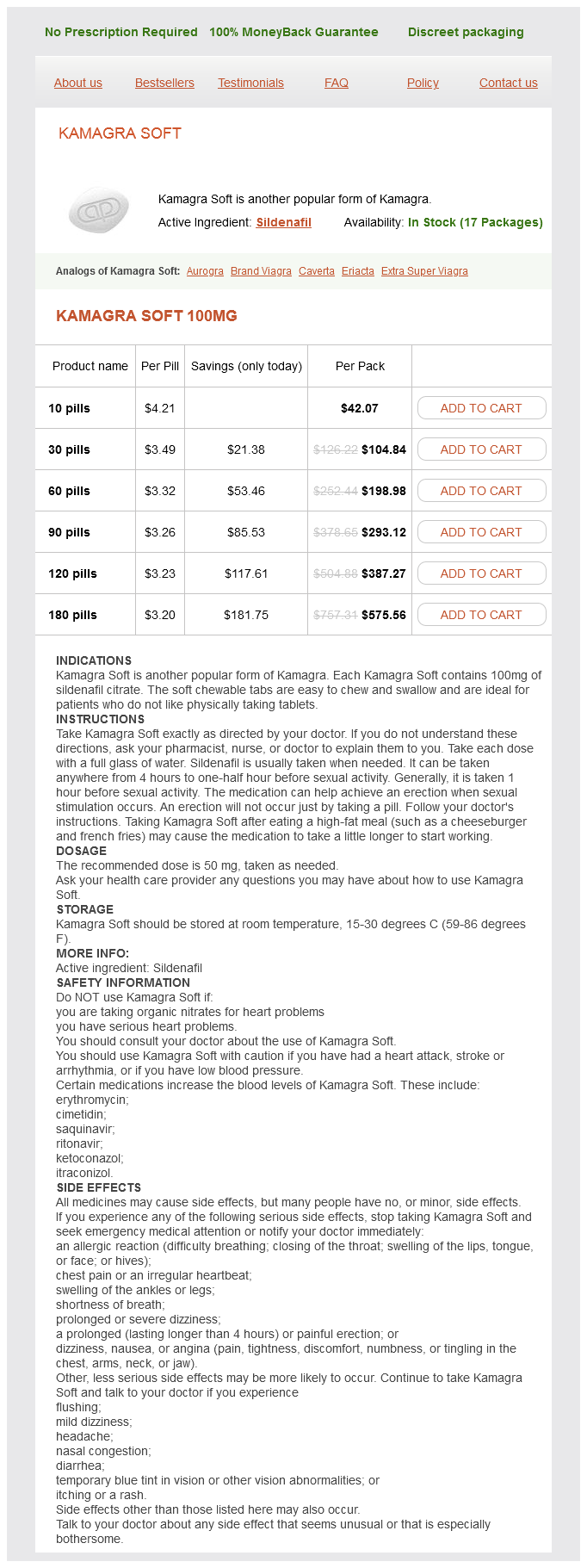
"100 mg kamagra soft purchase with mastercard, impotence erecaid system esteem battery operated vacuum impotence device".
M. Fasim, MD
Medical Instructor, Pacific Northwest University of Health Sciences
This is as a result of the anamorphic (asexual) state is olated from clinical specimens erectile dysfunction reasons kamagra soft 100 mg trusted, and the sexual or teleomorphic phase happens solely under very specialised circumstances in the laboratory erectile dysfunction daily pill order kamagra soft 100 mg otc. Likewise erectile dysfunction pump implant video 100 mg kamagra soft purchase free shipping, the parasitic phase of every fungus is tailored to develop at 37� C and to reproduce asexually in the alternative environmental niche of the host respiratory mucosa can erectile dysfunction cause infertility kamagra soft 100 mg order without prescription. This capability to exist in alternate morphogenic types (dimorphism) is certainly one of a number of particular traits (virulence factors) that enable these fungi to address hostile environmental circumstances of the hosts. The most important line of defense in opposition to the endemic dimorphic fungi is the pulmonary macrophage. Both main and opportunistic fungal pathogens are able to replication at 37� C. Knowledge of the precise etiologic agent may have important prognostic implications and should immediately affect the selection of antifungal remedy. The identification of yeastlike fungi to the species level usually requires the determination of the biochemical and physiologic profile of the organism along with the assessment of the microscopic morphology. In distinction, the identification of a mold is predicated virtually entirely on its microscopic morphology. Both yeasts and molds might require molecular or proteomic strategies to establish a definitive identification. The endemic dimorphic pathogens are recognized by their microscopic morphologic features, by the demonstration of thermal dimorphism, and by exoantigen and nucleic acid probe exams. The advantages of direct microscopic examination of scientific material for the diagnosis of fungal an infection embrace low cost and speed of analysis. In sure instances, the fungus may be not solely detected however recognized by microscopy as a outcome of it possesses a distinctive morphology. Microscopic detection of fungi in tissue serves to information the laboratory in deciding on essentially the most acceptable means to culture the specimen and is useful in figuring out the importance of culture results. Primary pathogens are able to initiating an infection in a traditional, apparently immunocompetent host. Primary pathogens possess putative virulence elements that enable them to actively breach host defenses that ordinarily restrict the invasive progress of other microbes. In distinction, opportunistic pathogens generally only trigger an infection when there are disruptions within the protecting limitations of the skin and mucous membranes or when defects within the host immune system permit them to penetrate, colonize, and reproduce the host. Each of the first systemic fungal pathogens is an agent of respiratory infections. The echinocandin antifungal brokers inhibit the 1,3-glucan synthesis enzyme advanced, resulting in deficient cell wall manufacturing. Most of the opposite systemically energetic antifungal agents act on targets that to some extent are shared by mammalian cells and thus could exhibit toxicity to the host and the infecting fungus. The attraction of mixture therapy is that, by using combos of antifungal brokers, one could possibly achieve a better scientific end result than with monotherapy. Synergy could also be achieved by combining two brokers, corresponding to terbinafine and an azole, which each assault the sterol pathway at totally different factors, leading to a more practical inhibition of ergosterol synthesis and disruption of the fungal cell membrane. Evaluation of this course of should embody radiographs of the extremity plus direct microscopic examination of any drainage. If sinus tracts are present, then they want to be examined for the presence of any granules. In the absence of drainage or granules, a deep surgical biopsy should be obtained. Drainage, granules, and biopsy material must be cultured for routine micro organism, acid-fast bacilli, and fungi (selective and nonselective media). Treatment of eumycotic mycetomas is often unsuccessful, whereas medical remedy (with antibacterial agents) is usually efficient in cases of actinomycotic mycetoma. Progression of a eumycotic mycetoma could additionally be slowed by administration of systemically active antifungal brokers, similar to amphotericin B, terbinafine, ketoconazole, itraconazole, or posaconazole. Amputation is the only definitive therapy however should be balanced against the rate of development, symptomatology, the availability of sufficient prosthesis, and the person circumstances of the patient. More just lately posaconazole appears to be a promising agent for the treatment of mycetoma with clinical cure or improvement of several mycetoma sufferers. Given the medical and epidemiologic proof, one may count on an infection with a zoophilic pathogen, similar to Microsporum canis or a Trichophyton species. A particular etiologic prognosis requires tradition of hair and skin scrapings, adopted by evaluation of the gross and microscopic look of the cultured fungus. In the case of dermatophytes, further identification could additionally be achieved by assessing the nutritional necessities of the fungus utilizing particular dermatophyte test media. This infection, tinea barbae, will require therapy with an agent similar to terbinafine or itraconazole. The common method can be to acquire a biopsy of the lesion and submit it for each histopathology (with fungal stains) and fungal cultures. Whereas histopathology rarely reveals the organism in lymphocutaneous sporotrichosis, it may rule out different pathogens, such as Nocardia, which may trigger related lesions. The differential diagnosis of this process includes a subacute bacterial course of attributable to widespread cardio and anaerobic gram-positive and gram-negative micro organism or infection brought on by nontuberculous mycobacteria, an actinomycotic mycetoma, or a eumycotic mycetoma. The list of more than likely fungi concerned in such a course of is extensive and consists of Acremonium, Fusarium, Scedosporium, Madurella, and Exophiala species amongst others. In their travels, they had been exposed to Histoplasma capsulatum (caves in Missouri and chicken coops in Iowa), Blastomyces dermatitidis (Wisconsin), and Coccidioides posadasii (immitis) (Arizona). Dimorphic fungi are organisms that exist in a mildew form in nature or within the laboratory at 25� C to 30� C (saprobic phase) and in a yeast or spherule type in tissues or when grown on enriched medium in the laboratory at 37� C (parasitic phase). In addition to dimorphism, all the brokers of the endemic mycoses share the ability to replicate at 37� C. In general, the life cycles of all dimorphic pathogens contain the inhalation of the infective spores in nature, followed by transformation throughout the lung into the yeast part, which evades killing by phagocytic cells and replicates both intracellularly and extracellularly. The analysis could additionally be made by serology (detection of antigen in urine and/or antibodies in serum), culture of respiratory secretions, and microscopic examination of sputum or bronchoalveolar lavage fluid. In rare situations, usually after heavy publicity, acute respiratory distress syndrome could also be seen. Specific antifungal remedy with itraconazole plus supportive care could also be necessary in such extreme circumstances. Because of the risk of malignancy, biopsy coupled with histopathology is required. Culture for fungi and mycobacteria ought to be carried out however will not be essential if attribute fungal elements are seen on histopathologic exam. Given her exposures, the nodule most likely represents coccidioidomycosis (coccidioidal granuloma). The combination of sinusitis and a wedge-shaped infiltrate in such a patient receiving voriconazole prophylaxis is strongly suggestive of an infection attributable to a mould aside from Aspergillus. Possibilities embody an infection brought on by a mucormycete or one other hyaline mildew with decreased susceptibility to voriconazole, such as Fusarium. The localized pneumonia plus sinusitis makes infection with Pneumocystis jirovecii unlikely. Therapy ought to embody decreasing the immunosuppression, if potential, coupled with surgical excision of contaminated materials and systemic remedy with amphotericin B. If the an infection is attributable to Mucormycetes, posaconazole or isavuconazole could also be helpful based mostly on case reports. Although examination and tradition of sputum could yield an organism, probably the most direct strategy could be bronchoscopy and biopsy of the mass. Examination of the tissue will present branching septate hyphae according to a fungus ball. In the event of pulmonary hemorrhage, which can be extreme and lifethreatening, surgical excision of the cavity and fungus ball could additionally be indicated. The prognosis of histoplasmosis could additionally be made by direct microscopy of respiratory secretions; histopathologic examination of tissue biopsy, tradition of blood, bone marrow, or other clinical materials; and by serologic studies, together with antigen detection in blood and urine. In most instances, acute pulmonary histoplasmosis is self-limited and requires solely supportive care. Amphotericin B is usually reserved for cases marked by acute respiratory distress syndrome or disseminated disease. The differential analysis of a solitary lung nodule consists of cancer, mycobacterial infection, dirofilariasis (dog heartworm), and fungal. These three entities may be differentiated by diameter of the spherule, thickness of the wall, presence and dimension of endospores, host reaction, and staining with mucicarmine (see Table sixty six. The conidia of Adiaspiromyces crescens are inhaled into the lungs, by which they rework into adiaconidia. The host response to the adiaconidia is fibrogranulomatous in nature, and the expanding granuloma might cause symptoms due to compression and displacement of the distal airways and alveolar parenchyma.
These sufferers should undergo analysis for arrhythmia erectile dysfunction cures over the counter kamagra soft 100 mg discount visa, especially in the presence of risk elements impotence zinc order 100 mg kamagra soft free shipping, earlier than having all of their signs attributed to their psychiatric illness erectile dysfunction at the age of 17 order kamagra soft 100 mg with amex. This type of palpitation is the type most probably to be associated with ventricular tachycardia or different critical arrhythmia erectile dysfunction vs impotence purchase kamagra soft 100 mg on line. Palpitations might happen extra frequently during pregnancy, which is a excessive output state. Discussion of the administration of specific causes of palpitations, together with anemia, thyrotoxicosis, and hypoglycemia, may be discovered elsewhere. Chronic management of atrial fibrillation is also beyond the scope of this article. In these patients, consider a referral to a heart specialist for analysis for an implantable cardiac defibrillator. Chan T, Worster A: the clinical analysis of arrhythmias in patients presenting with palpitations, Ann Emerg Med fifty seven:303�304, 2011. Chlamydia trachomatis Corynebacterium diphtheriae Epstein-Barr virus <1 <1 <1 <1 <1 <1 Human immunodeficiency virus Neisseria gonorrhoeae 50 m � Penicillin is the drug of alternative for group A -hemolytic streptococcus pharyngitis. A first-generation cephalosporin or macrolide is indicated if the affected person is allergic to penicillin. Patients older than 12 years may be handled with once-daily amoxicillin (Moxatag). The M protein cross-reacts with cardiac myosin and laminin, probably causing rheumatic heart disease. Some streptococcus strains produce erythrogenic toxins, causing the rash of scarlet fever. In temperate climates, pharyngitis occurs in outbreaks during winter and early spring, predominantly involving youngsters 5 to 15 years of age. Group C -hemolytic streptococcus pharyngitis happens mainly in college students and young adults. Of other causes of pharyngitis (Table 1), gonococcal pharyngitis is most typical in older adolescents and younger adults. Infants not often present with exudative pharyngitis but have coryza with excoriation and crusting of the nares. Patients develop lifelong immunity to one serotype after an infection, however reinfection with a different serotype is possible. If gonococcal pharyngitis is diagnosed in a prepubertal youngster, sexual abuse must be thought-about. Swimming swimming pools have been implicated in transmission of group C and D streptococcal pharyngitis. Pathophysiology Pathogenic strains of Streptococcus pyogenes may be differentiated by Lancefield antigens and by hemolysis on blood agar. Phase I trials have been accomplished on a multivalent vaccine concentrating on streptococcus M proteins that cause pharyngitis, invasive illness, and rheumatic fever. Clinical indicators can embody tonsillar erythema with or with out exudate, anterior cervical lymphadenitis, taste bud petechiae, purple swollen uvula, and scarletiniform rash. The fine, papular, shiny purple rash blanches with strain, begins on the neck, and spreads to the extremities and trunk. The punctate rash spares the face, however sufferers have flushed cheeks and forehead with pallor around the mouth. After desquamation of an preliminary white coating, the tongue has a classical strawberry look attributable to edematous papillae. Viral Pharyngitis Coryza, hoarseness, cough, diarrhea, viral exanthem, anterior stomatitis, and conjunctivitis can indicate a viral etiology for pharyngitis. Adenovirus infections may cause fever for 7 days, and conjunctivitis can persist for 14 days. Enterovirus pharyngitis (coxsackievirus, echovirus, enterovirus) happens in summer and fall. Fever, cervical adenopathy, and erythema of the tonsils are widespread, but exudates are uncommon. Herpangina (Coxsackie virus A/B) manifests with fever and painful papulovesicular lesions in the posterior oropharynx that resolve in 7 days. Hand-foot-and-mouth disease (Coxsackie virus A-16) manifests with painful vesicles and ulcers within the mouth plus painful vesicles on the palms, soles, and occasionally trunk. It manifests as acute gingivostomatitis, with ulcerating vesicles on the anterior mouth and lips however not on the posterior pharynx. Infectious Mononucleosis Classically a triad of extreme sore throat, lymphadenopathy, and fever (up to 104�F) in 15- to 25-year-olds, mononucleosis begins with a prodrome of chills, sweats, fever, and malaise. Clinical signs embody enlarged tonsils; posterior and anterior cervical, axillary and inguinal adenopathy; and hepatosplenomegaly. If a false-negative check is suspected, an IgM antibody to viral capsid antigen is indicated to affirm the diagnosis. A score of 1 is given for every of the following traits: tonsillar exudate, tender anterior cervical adenopathy, historical past of fever, and an absence of cough. The tradition ought to be obtained earlier than beginning antibiotic remedy, as a result of even a single dose of antibiotics can cause the culture to be negative. Infection spreads from the pharynx to embody the encompassing tissues, with subsequent thrombophlebitis of the internal jugular vein. The aim of remedy of viral pharyngitis is control of symptoms, especially reduction of ache. Nonsteroidal antiinflammatory drugs are barely superior than acetaminophen (Tylenol) for ache relief. Ancillary remedy choices include rest, enough fluid consumption, and antipyretic medicines. Azithromycin (patients older than 6 months): Day 1: 10 mg/kg once (up to grownup dose of 500 mg); days 2 to 5: 5 mg/kg as quickly as every day (up to grownup dose of 250 mg/day). Nonsuppurative issues include acute rheumatic fever, acute poststreptococcal glomerulonephritis, and poststreptococcal reactive arthritis. Acute poststreptococcal glomerulonephritis can occur 10 days after pharyngeal an infection and 21 days after pores and skin an infection. However if an antibiotic is began it should be discontinued if the culture is negative. No clear evidence supports antibiotic treatment for group C or group G streptococcal pharyngitis. Meta-analyses have found inconclusive evidence of profit from tonsillectomy in comparability with nonsurgical therapy. Hodgkin lymphoma is the malignant disease most strongly related to pruritus and happens in up to 30% of sufferers recognized with pruritus. Impulses are transmitted from the dorsal root ganglion to the spinothalamic tract. Pruritus then generates a spinal reflex response, the scratch, which is as innate as a deep tendon reflex. Lastly, opioids are recognized to modulate the feeling of pruritus, both peripherally and centrally. Clinical Manifestations Pruritus is among the commonest symptoms in dermatology. Other related symptoms rely upon the etiology and may embrace urticarial skin lesions, dry skin, jaundice, and thyroidrelated symptoms. Left untreated, itch and its related scratching improve the chance of persistent pores and skin modifications and secondary infection. Primary diseased, infected skin � Inflammatory: Atopic and make contact with dermatitis, psoriasis, dry pores and skin, drug reactions � Infectious: Mycotic, bacterial and viral infections, folliculitis, scabies, pediculosis, arthropod reactions, and insect bites � Autoimmune: Bullous dermatoses, particularly dermatitis herpetiformis, bullous pemphigoid, and dermatomyositis � Dermatoses of being pregnant � Neoplasms: Cutaneous T-cell-lymphoma (especially erythrodermic variants), cutaneous B-cell lymphoma, leukemic infiltrates of the skin 2. Pruritus with persistent secondary scratch lesions (The underlying origin could also be a systemic illness or a pores and skin illness. The classification chosen for this chapter focuses on medical indicators and distinguishes between the illness with and with out primary or secondary pores and skin lesions. Group three: Pruritus with continual secondary scratch lesions ht tp:// Classification eb oo Pruritus is defined as an disagreeable sensory percetion that causes the will to scratch.
Infection of astrocytes leads to abnormal development and look; manufacturing of virus in oligodendrocytes is lytic and causes demyelination prostate cancer erectile dysfunction statistics generic 100 mg kamagra soft. This consists of organ transplant recipients; chemotherapy patients; and interestingly erectile dysfunction treatment food kamagra soft 100 mg purchase with mastercard, people who find themselves treated with natalizumab impotence tumblr kamagra soft 100 mg lowest price, which blocks the interaction of 4-integrin on immune cells with vascular cell adhesion molecule 1 erectile dysfunction quick natural remedies 100 mg kamagra soft purchase mastercard. This prevents T-cell interactions with antigen-presenting cells and their capacity to cross the blood-brain barrier. The predominant routes of transmission of adenovirus are as aerosols and by the fecal-oral route, however adenovirus can also be transmitted by contact. The more than likely sorts are serotypes 4 and 7 but could also be 1, 2, three, 5, 7, and 14. Diseases include conjunctivitis (pinkeye) and keratoconjunctivitis, pharyngoconjunctival fever, sore throat, pneumonia, frequent coldlike syndrome, gastroenteritis, and systemic infection. Replication of the virus will kill the contaminated cell, so antibody is enough to resolve most adenovirus ailments. Adenovirus varieties 4 and seven are widespread causes of acute respiratory illness that spreads shortly to individuals in shut proximity and beneath stress (military barracks). Infection of military personnel would quickly unfold and debilitate whole units, which might compromise their capability to serve their country. An outbreak of adenovirus 14 at Lackland Air Force Base is described in Clinical Case 42. Although the wart may disappear, the viral genome could remain in cells on the base of the wart website. Thus complete virion particles are only made within the terminally differentiated skin cells and virus are released as these cells die and turn out to be the floor layer of pores and skin. For the polyomaviruses, T cells control the replication of those viruses in an unknown manner. The most probably supply of this outbreak is the unchlorinated water in the camp pond. The capsid of the adenovirus protects the virus from harsh conditions of drying and even the acid and bile of the gastrointestinal tract to enable the virus to be transmitted by fecal-oral and respiratory routes, by way of contact, and on fomites. An eye swab, a fecal pattern, and a nasal wipe could presumably be tested for the virus within the contaminated child. Pond water could be concentrated to enable detection of virus as a typical source of the infection. Both viruses trigger similar presentations, and it is dependent upon which virus was positioned on the site. Once within the B cell, it uses the natural cell biology of the B cell to promote its latent, recurrent and productive cycles. Immunocompromised individuals and neonates are at risk due to the lack of protective cell-mediated immunity. The immunocompromised individual is at risk for severe illness for all herpesviruses. There are two vaccines for zoster: a stronger model of the live varicella vaccine and a subunit vaccine consisting of the glycoprotein E and an adjuvant. There are antiviral medicine, together with acyclovir, valacyclovir, penciclovir, and famciclovir. The prognosis may be confirmed by taking a Tzanck smear and analyzing the cells taken from the base of a lesion for syncytia and Cowdry sort A inclusion bodies. Latency is established within the trigeminal ganglia because of the location of an infection. Future recurrences might be triggered by stresses similar to ultraviolet B gentle and emotional or physical stress. The child was infected by contact with lesion materials from an infected particular person. Swollen glands and fatigue are attributable to the largescale activation of the immune response, as indicated by the enlargement of the numbers of T cells. Boys with Duncan disease (X-linked immunodeficiency) die of leukemia-like immunoproliferation attributable to the shortcoming of their T cells to management the outgrowth of B cells (this function is generally used to restrict the outgrowth of B cells in response to antigen). Thought Question: Herpesviruses are associated with many alternative diseases, including atherosclerosis, Alzheimer illness, inflammatory illnesses, and cancer. Because these viruses are ubiquitous, lifelong an infection is the established order, but every particular person interacts with the an infection in a different manner. It is harder to know the refined effects these viruses have on the steadiness between irritation and maintenance (status quo) (think M1 versus M2 macrophages) that continues all the time. The latter argument has been raised to encourage people older than sixty five years to be immunized for influenza and Streptococcus pneumoniae to stop the irritation that accompanies an infection. Wild-type smallpox is strictly a human virus (no animal reservoirs), it always causes disease indicators (allows identification of contaminated individuals), there is only one serotype, and an efficient vaccine is available. It is launched, like human papilloma virus, on shedding of the terminally differentiated keratinocytes or epithelium. Poxviruses have a big, complicated construction with a quantity of membranes, lateral bodies, and different constructions. Unlike different viruses with small interlocking capsid items, synthesis and assembly of advanced buildings require complicated interactions to be certain that all the required enzymes and structures are included in ultimate package deal. Immunity to smallpox an infection develops from the native innate responses to the more systemic antibody and T-cell responses. Because the virus has spread throughout the physique by this time and infected many tissues, the immune response (especially cell-mediated immunity and inflammation) could cause great injury when trying to eliminate the infected cells. In a vaccinated particular person, antibody is present in the bloodstream to block the unfold of the virus by viremia. T-cell responses are activated within 1 to 4 days from memory cells, and these responses can successfully restrict cell-cell spread, kill infected cells, and resolve the an infection. Neither virus is cytolytic, and virus is launched as the pores and skin cell matures and dies. Infection of an adult may lead to acute polyarthritis brought on by immune complex�mediated inflammatory reactions. Infection of the fetus can outcome in hydrops fetalis, which often ends in fetal demise. The virus infects the erythroid precursors of the fetus, killing them and causing anemia, edema, hypoxia, and congestive coronary heart failure. A somewhat related course of illness would happen with human herpesvirus 6 induction of exanthema subitum (roseola), though the time course could additionally be different. The child was infectious in the course of the initial illness signs and symptoms, which resemble a light cold. The initial nonspecific disease indicators are attributable to interferon and different innate responses to the infection. The rash is caused by immune responses which are most likely associated with antibody and virion immune complexes. The rash of the daughter and the arthralgia of the mother are attributable to the presence of antibody, formation of immune complexes, and kind 2 and three hypersensitivity reactions. Pregnant girls are in danger for B19 an infection, which causes hydrops fetalis and loss of the fetus. Infection could have occurred on contact with fecal materials from the mom but, just as doubtless, by contact with nasal secretions or an aerosol. The mother or another family member is likely to be the source of an infection because echovirus eleven causes a typical chilly in adults. The virus is a naked capsid virus and is impervious to acids, detergents, warmth, and dryness. It can face up to the tough conditions of the gastrointestinal tract and even insufficient sewage remedy. As a result, the virus is transmitted by the fecal-oral route, however it can also infect the higher respiratory tract and trigger widespread coldlike symptoms and can be transmitted by contact or aerosols. The virus requires a rising cell to replicate and targets the blood group P antigen (globoside) as a receptor on these cells. The most essential immune response for cover is antibody, which can neutralize the launched virus to forestall spread of the virus. Antibody within the serum additionally prevents unfold of the virus to the target tissue, which would be the meninges and mind. They are transmitted primarily by contact with contaminated hands, surfaces, and fomites, as properly as by aerosols. There are multiple microbial causes of gastroenteritis, and the nature of the stool, the time course of onset, and the historical past of exposure are necessary clues to the trigger of the illness.
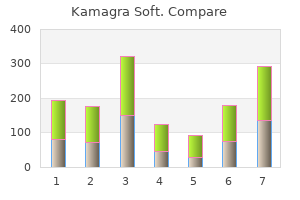
| Comparative prices of Kamagra Soft | ||
| # | Retailer | Average price |
| 1 | Lowe's | 723 |
| 2 | O'Reilly Automotive | 786 |
| 3 | Williams-Sonoma | 448 |
| 4 | Ingles Markets | 193 |
| 5 | OfficeMax | 367 |
| 6 | Family Dollar | 397 |
| 7 | BJ'S Wholesale Club | 896 |
| 8 | Dick's Sporting Goods | 383 |